
BMW iX3 M60 revealed with 612hp and up to 468 miles of range
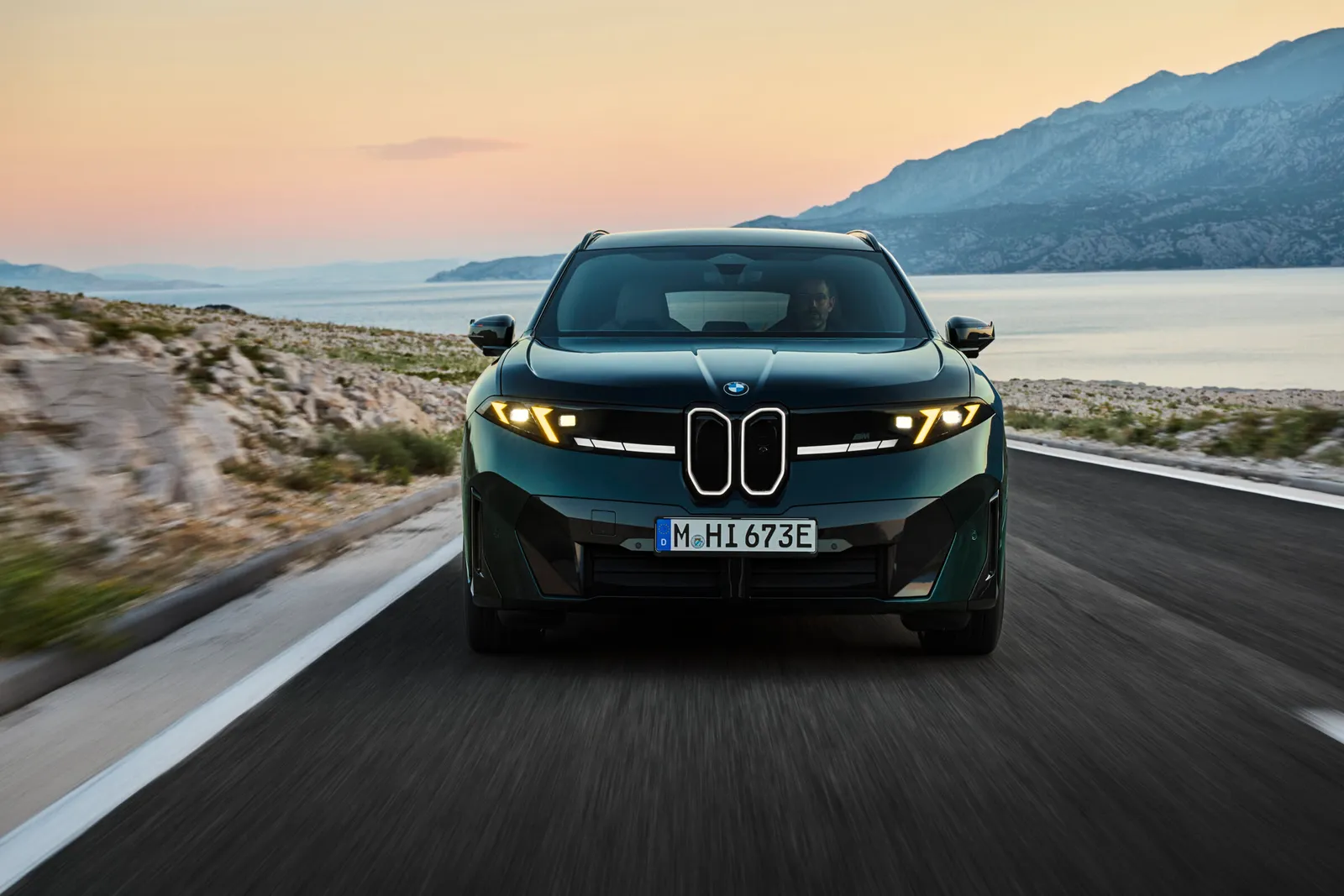
BMW has revealed a 612hp version of its new iX3 electric SUV, combining a claimed 0–62mph time of 3.9 seconds with up to 468 miles of range. The iX3 M60 xDrive becomes the most powerful model in the Neue Klasse line-up, with orders opening at the end of January 2027.
The new M Performance variant pairs two electric motors with a 108.7kWh usable battery and supports DC charging at up to 400kW. BMW says a suitable rapid charger could add as much as 211 miles of range in ten minutes, giving the performance flagship substantial long-distance potential alongside its acceleration.
Production is scheduled to begin at BMW’s Debrecen factory in Hungary in spring 2027. UK pricing and customer delivery dates have not been announced in the launch release. BMW also stresses that its performance, consumption, range and charging figures remain provisional, with binding WLTP values not yet available.
Adaptive M suspension, variable sport steering and an electronically controlled rear M Sport differential are standard. The specification also includes M Sport brakes, 21-inch alloy wheels, electrically adjustable M Sport seats and a Harman Kardon audio system, while yellow lighting provides a visual distinction from other iX3 models.
The M60 builds on the iX3’s role as the first model in BMW’s Neue Klasse generation. Its sixth-generation electric drive technology brings an 800V electrical architecture, cylindrical battery cells and bidirectional charging capability, with the performance version adding a revised rear motor and chassis changes intended to sharpen its responses.
For EV buyers, the combination of battery capacity, efficiency and charging speed is likely to matter as much as the headline power output. BMW quotes provisional combined consumption of 17.6–20.5kWh per 100km, equivalent to approximately 3.0–3.5 miles per kWh. The maximum 468-mile range is a laboratory-cycle figure rather than a guaranteed distance between charging stops.
The ten-minute charging claim likewise comes with qualifications. BMW says it was calculated using the WLTP cycle and assumes charging infrastructure capable of supplying the maximum DC power. Actual performance will depend on factors including battery temperature, state of charge, vehicle equipment and the power available from the charger.
AC Charging Professional is fitted as standard, allowing AC charging at up to 22kW where a suitable supply is available. That adds another charging option alongside the high-power DC capability, although BMW’s announcement does not provide a 10–80 per cent rapid-charging time for the M60.
Power comes from one motor on each axle, together producing a maximum 450kW, quoted by BMW as 612hp, and 875Nm of torque. Alongside the claimed 3.9-second sprint to 62mph, the company lists a top speed of 149mph.
A new electrically excited synchronous motor at the rear is central to the increased performance. It uses a newly developed stator and a more powerful inverter, rated at 420A rather than 300A. BMW says these changes raise both peak and continuous power and torque, while revised gearing and a higher usable rotor speed help increase maximum speed.
Managing that output is BMW’s Heart of Joy computer, working with M Dynamic Performance Control software. The system coordinates the drive motors, braking and steering subfunctions, as well as charging and energy recuperation. BMW says it operates ten times faster than its previous systems, processing driving-related information within milliseconds.
The manufacturer attributes more consistent cornering behaviour and fewer corrective control inputs to this integrated approach. Those remain claims to assess on the road, but the system also has a practical everyday role: controlling regenerative braking and the transition to a standstill.
BMW says the M60 can handle almost all everyday deceleration through energy recuperation. Its Soft Stop function is designed to bring the vehicle smoothly to rest, while the conventional brakes are called upon during harder driving or emergency stops. The standard M Sport brakes can be specified in red or blue.
The chassis receives bespoke spring and damper tuning, additional front-end bracing and front anti-roll bar links intended to improve steering precision and reduce body roll. Electronically controlled dampers adjust to the driving situation, while the rear differential is designed to improve traction through corners and on slippery surfaces.
The variable-ratio steering is intended to combine sharper responses with reduced effort during parking and urban manoeuvres. Suspension settings are selected through My Modes, allowing drivers to alter the car’s behaviour without changing hardware. BMW says the adaptive dampers have also been developed to improve ride comfort and reduce noise, giving the chassis a broader brief than simply delivering faster responses on demanding roads.
Drivers can select exclusive M Sport and M Sport Plus modes, changing the responses of the powertrain, chassis and steering. Steering-wheel paddles also allow the driver to influence the electric drive system’s responses, with dedicated buttons providing access to Boost Mode and M Mode.
Externally, the M60 introduces M Yellow Lights inspired by BMW’s racing cars. Their use is market-dependent and requires the low-beam headlights to be switched on. Additional lighting elements alongside the kidney grille take their shape from the familiar M stripes, with an M logo incorporated into the light signature.
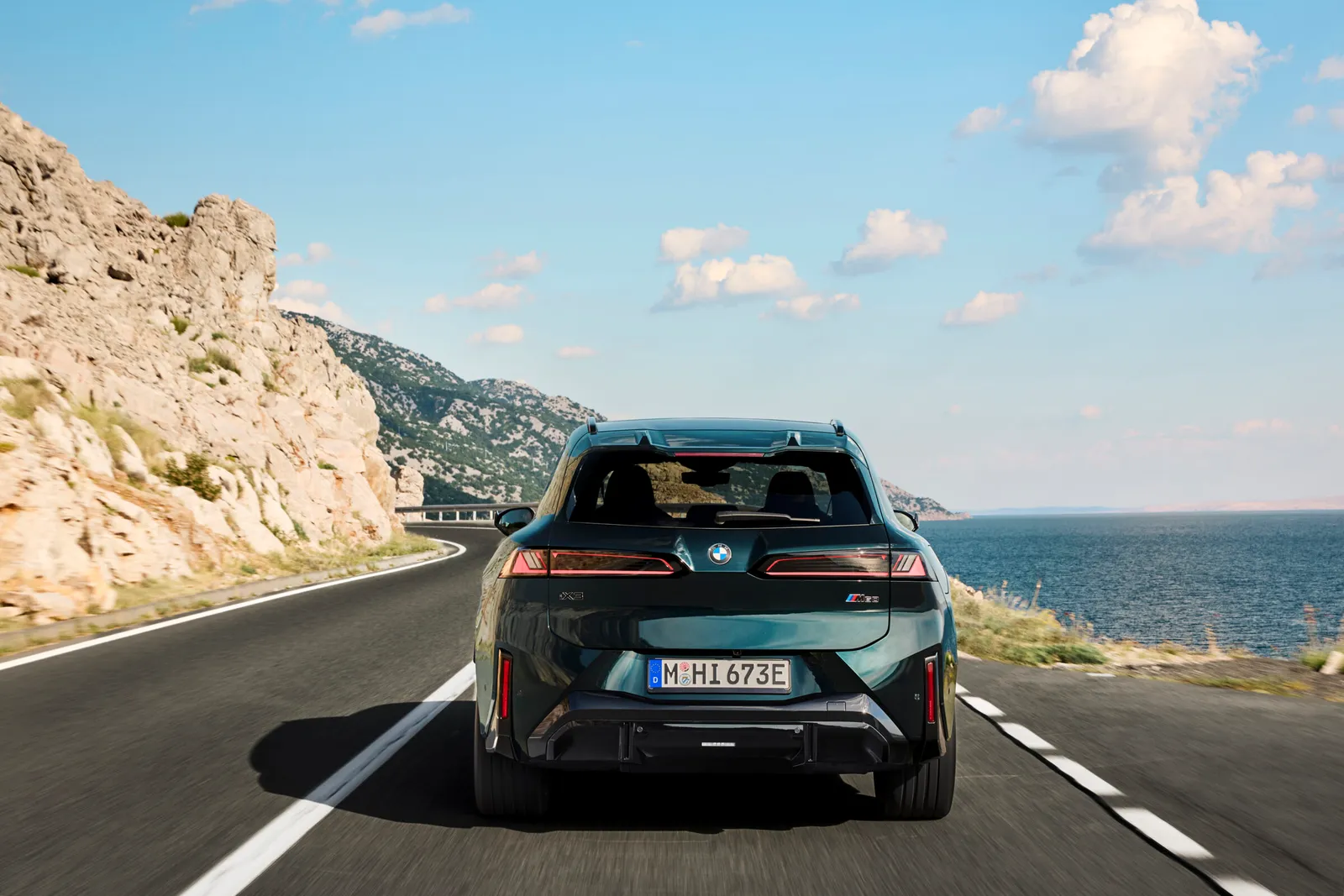
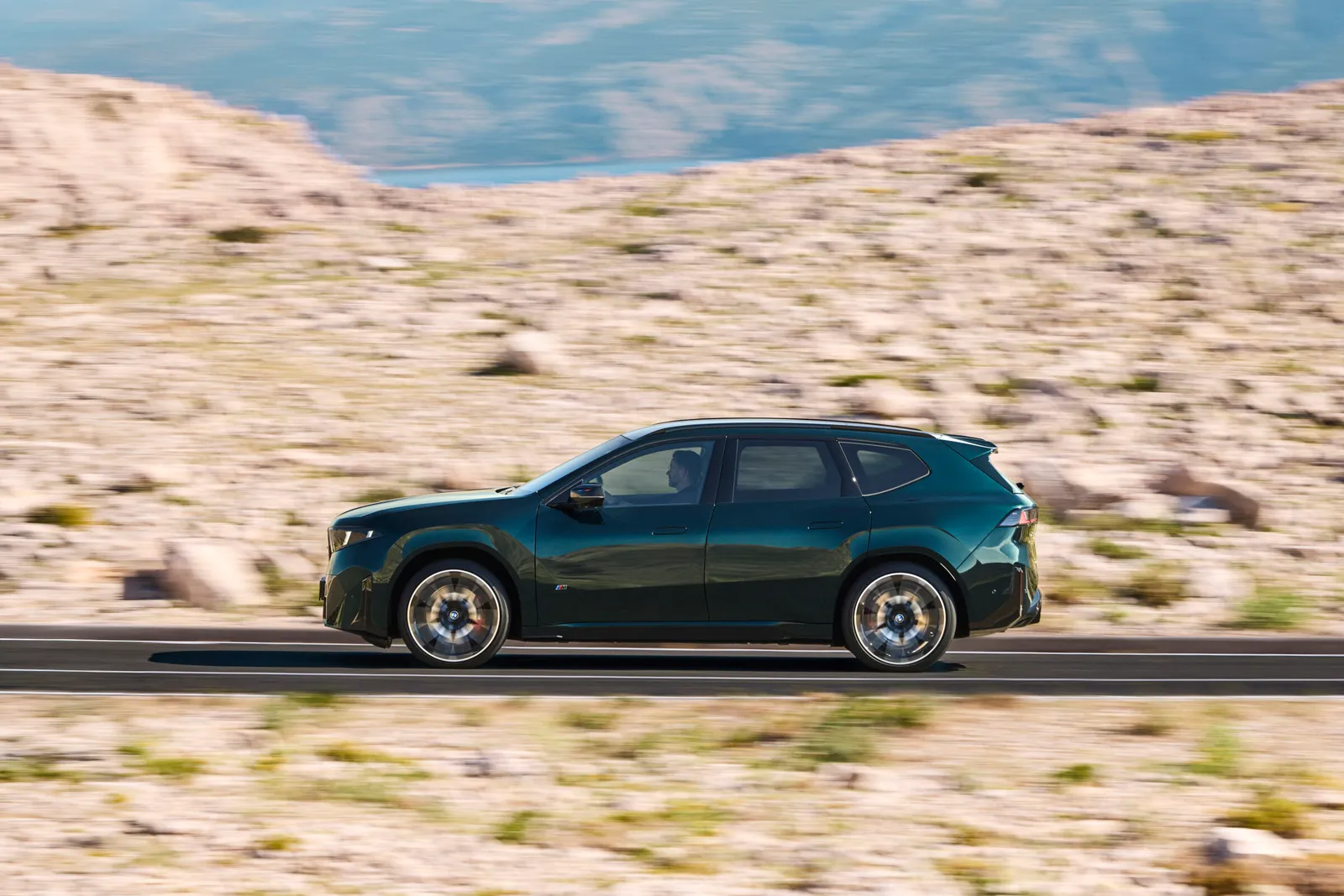
The standard Iconic Glow exterior package adds illuminated grille contours, adaptive headlights and a non-dazzling high-beam assistant. Black roof rails, M mirror caps and a rear diffuser contribute to the revised appearance. A model-specific roof spoiler incorporates two aeroblades, which BMW says increase rear-axle downforce.
Buyers can upgrade from the standard 21-inch wheels to 22-inch designs, including an M aerodynamic wheel exclusive to this variant. Optional sport tyres are available for the 21-inch wheels. The launch colour selection includes 25 special-request paint finishes, with more planned subsequently.
Inside, BMW Panoramic iDrive runs Operating System X, combining the Panoramic Vision display with a 17.9-inch central touchscreen angled towards the driver. A 3D head-up display is optional. The M Sport steering wheel gains a red centre marker, while an M-specific power display shows output, available reserves and recuperation.
The standard M Sport seats offer ten-way electric adjustment, lumbar support, adjustable backrest width and thigh support, plus a massage function. Illuminated M logos appear in the integral head restraints. Standard upholstery combines black Veganza with M PerformTex, while alternative interiors include Merino leather options.
A 13-speaker, 430W Harman Kardon system supports Dolby Atmos. Optional Digital Premium services provide access to M-specific applications, including configurable vehicle-data dashboards and an acceleration display. These accompany broader personalisation settings for lighting, sound and screen appearance.
The SUV measures 4,782mm long, 1,895mm wide and 1,635mm high, with a 2,897mm wheelbase. Its assistance technology includes BMW Symbiotic Drive and SAE Level 2 systems. BMW quotes hands-free motorway assistance at up to 81mph, although the release does not confirm UK availability for that function.