
Audi A2 e-tron Targets Mass-Market EVs With 401-Mile Range
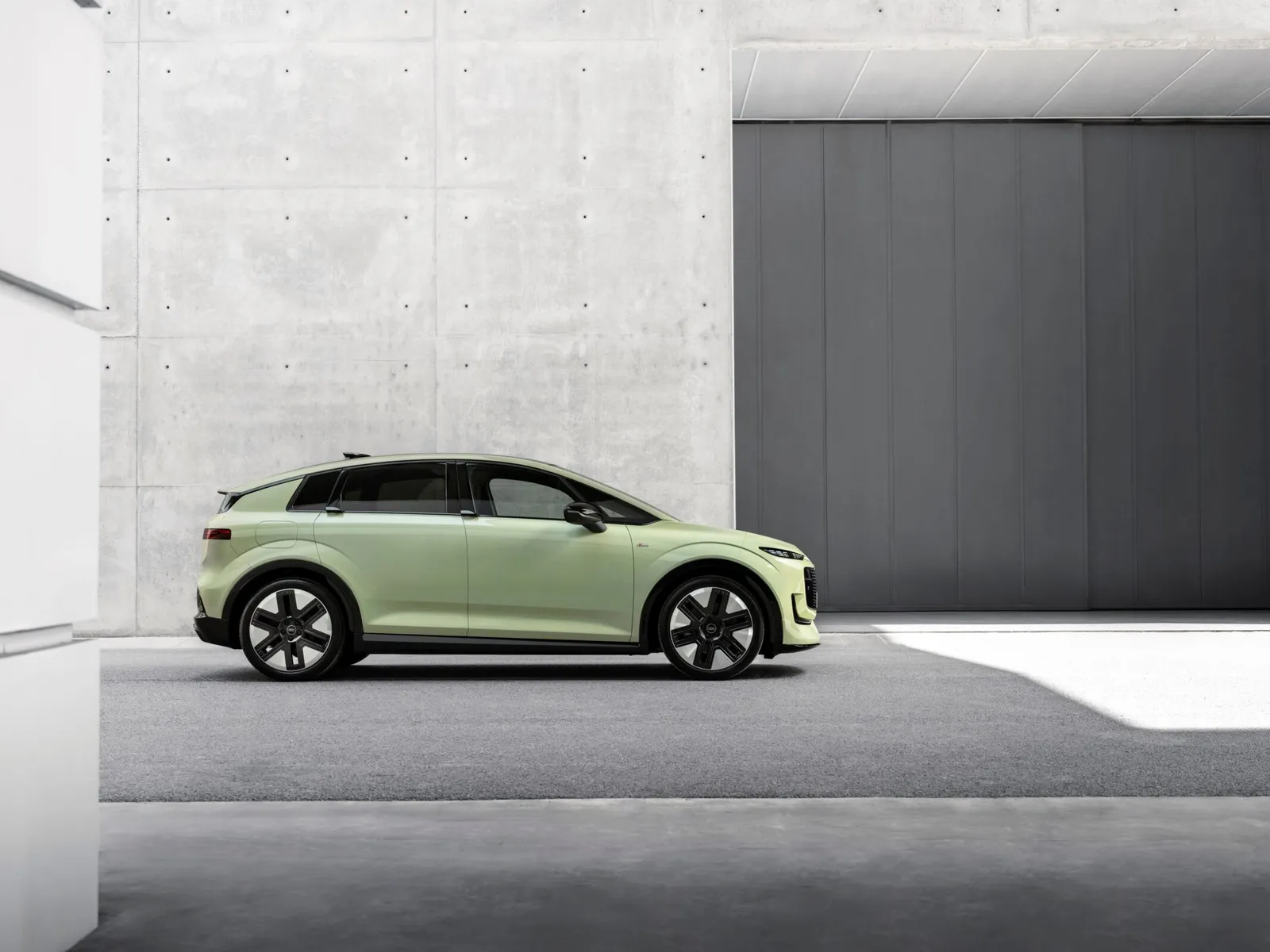
Audi has revived the A2 name for a new compact electric car that will cost from £32,200 in the UK, travel up to 401 miles on a charge and offer bidirectional charging alongside technology more commonly associated with the brand’s larger models.
Order books for the Audi A2 e-tron will open in October 2026, with the first deliveries expected through UK Audi Centres in early 2027. The rear-wheel-drive model will be offered with three battery sizes and four power outputs, giving Audi a new entry point below the Q4 e-tron at a price intended to challenge mainstream electric hatchbacks and compact crossovers.
The longest-range version combines an 84kWh gross-capacity battery with a 231PS motor and achieves up to 401 miles under the WLTP test cycle. The same battery paired with the more powerful 326PS motor delivers up to 391 miles, while 52kWh and 61kWh versions provide claimed ranges of up to 262 and 320 miles respectively.
Audi says the most economical configuration consumes just 12.8kWh per 100km, equivalent to 4.85 miles per kWh, making the A2 e-tron the most efficient production model in the company’s history. That figure applies to the 190PS version fitted with an optional efficiency package.
“Our customers want electric mobility that impresses in everyday life,” said Audi chief executive Gernot Döllner. “The A2 e-tron is our promise to deliver exactly that – efficient, compact, and thoughtfully designed down to the last detail. We’re making entry into the electric Audi world easier and more relevant than ever.”
The £32,200 starting price is likely to be among the car’s biggest attractions, although Audi has not yet confirmed precisely which powertrain and equipment combination it buys in Britain. Full UK technical data and model specifications will be released when ordering opens.
Three Batteries And Four Power Outputs
The range begins with a 170PS motor producing 350Nm of torque, paired with a 52kWh battery. It reaches 62mph in 8.8 seconds, has a 99mph top speed and can cover up to 262 miles. The 190PS model retains 350Nm but cuts the 0-62mph time to 7.9 seconds and offers up to 320 miles from its 61kWh battery.
Both smaller batteries use lithium iron phosphate cells in a cell-to-pack design, which integrates the cells directly into the battery housing to make better use of space. Audi says the latest LFP chemistry also maintains strong performance at low charge levels and in cold weather.
The two 84kWh models instead use nickel manganese cobalt cells. The 231PS version produces 350Nm and accelerates to 62mph in seven seconds, while the flagship delivers 326PS and 545Nm, completing the same sprint in 5.7 seconds. Its top speed rises from 99mph to 124mph.
Maximum DC charging power varies with battery size. The 52kWh pack accepts up to 100kW and takes a claimed 24 minutes to charge from 10 to 80%, while the 61kWh battery peaks at 105kW and completes the same task in about 26 minutes. The 84kWh pack can charge at up to 183kW, with a 10-80% time of 29 minutes.
All versions use permanent-magnet synchronous motors and silicon-carbide power electronics to reduce electrical losses. Four regenerative-braking settings are available, including three levels selected using steering-wheel paddles and a B mode providing one-pedal driving to a complete stop.
Designed Around Efficiency And Space
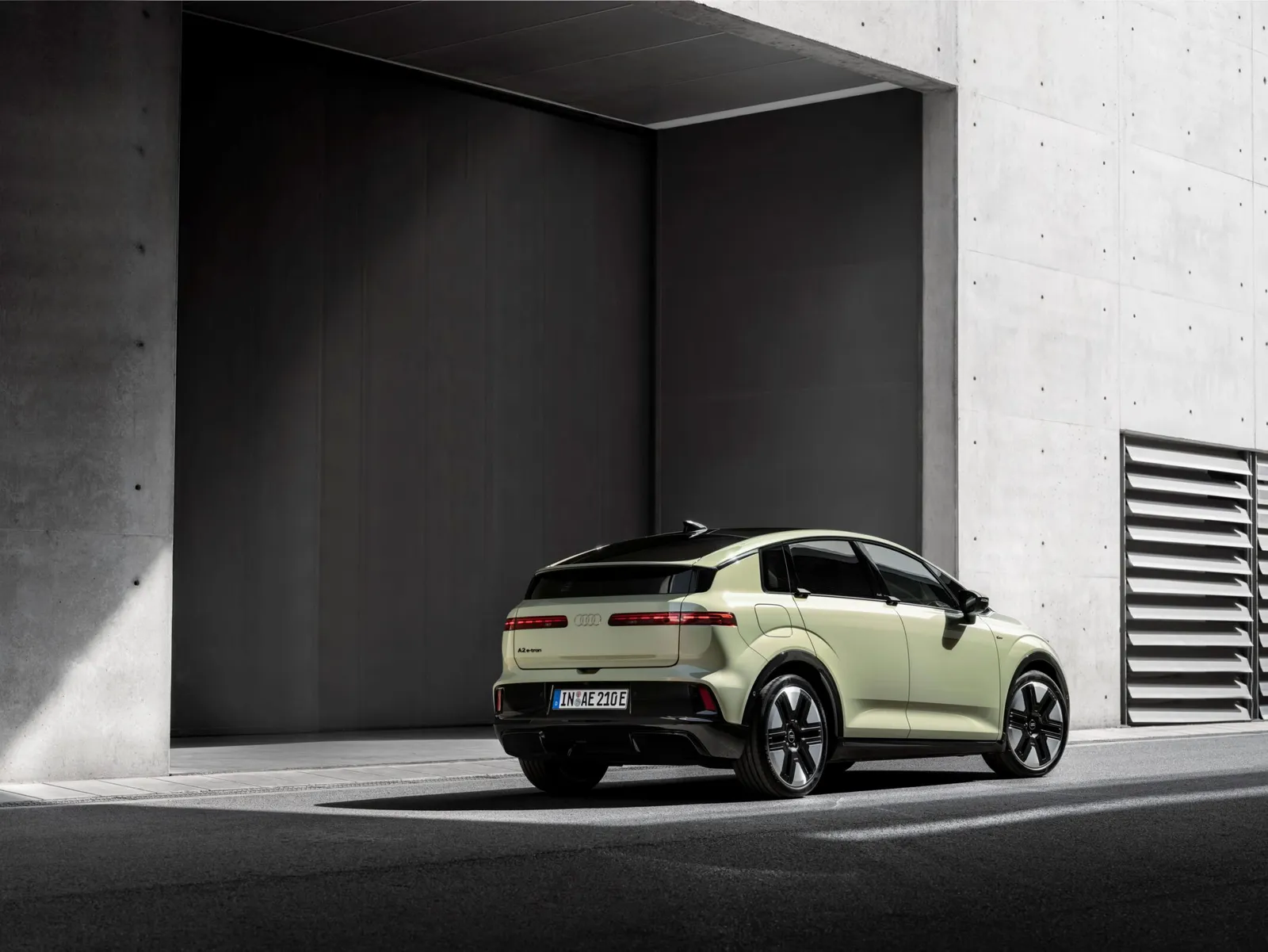
The new A2 e-tron has a long 2.77-metre wheelbase and short overhangs, with its shape engineered to maximise cabin room without sacrificing efficiency. A drag coefficient of 0.24 is the best among Audi’s compact models.
Aerodynamic measures include a largely enclosed underbody, an air intake that opens only when cooling is required, specialised wheel-arch trim to reduce turbulence and newly developed aero wheels. Flush, electrically operated door handles respond to a light pull and include their own energy reserve so the doors can still be opened if the car’s main electrical system fails.
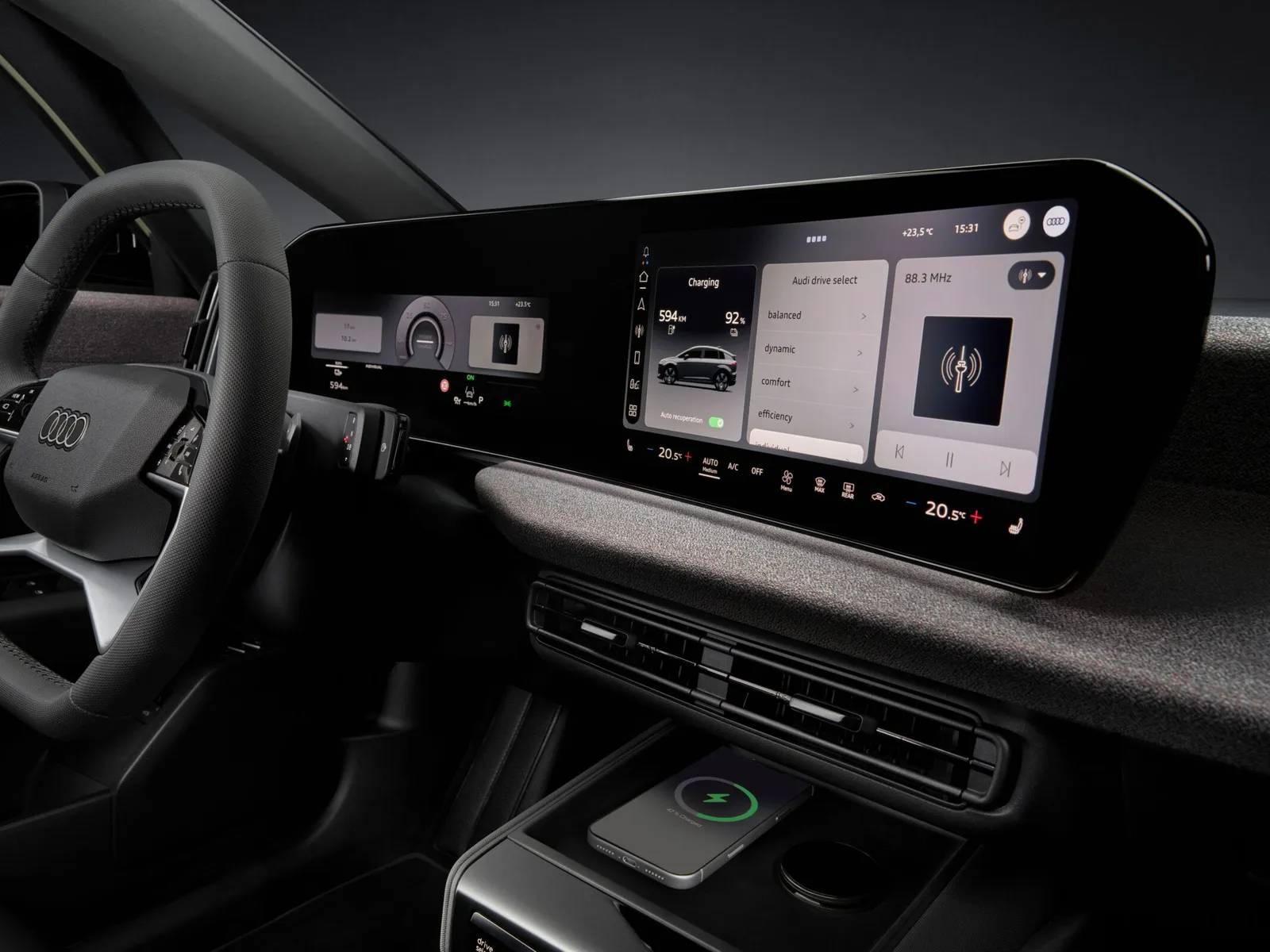
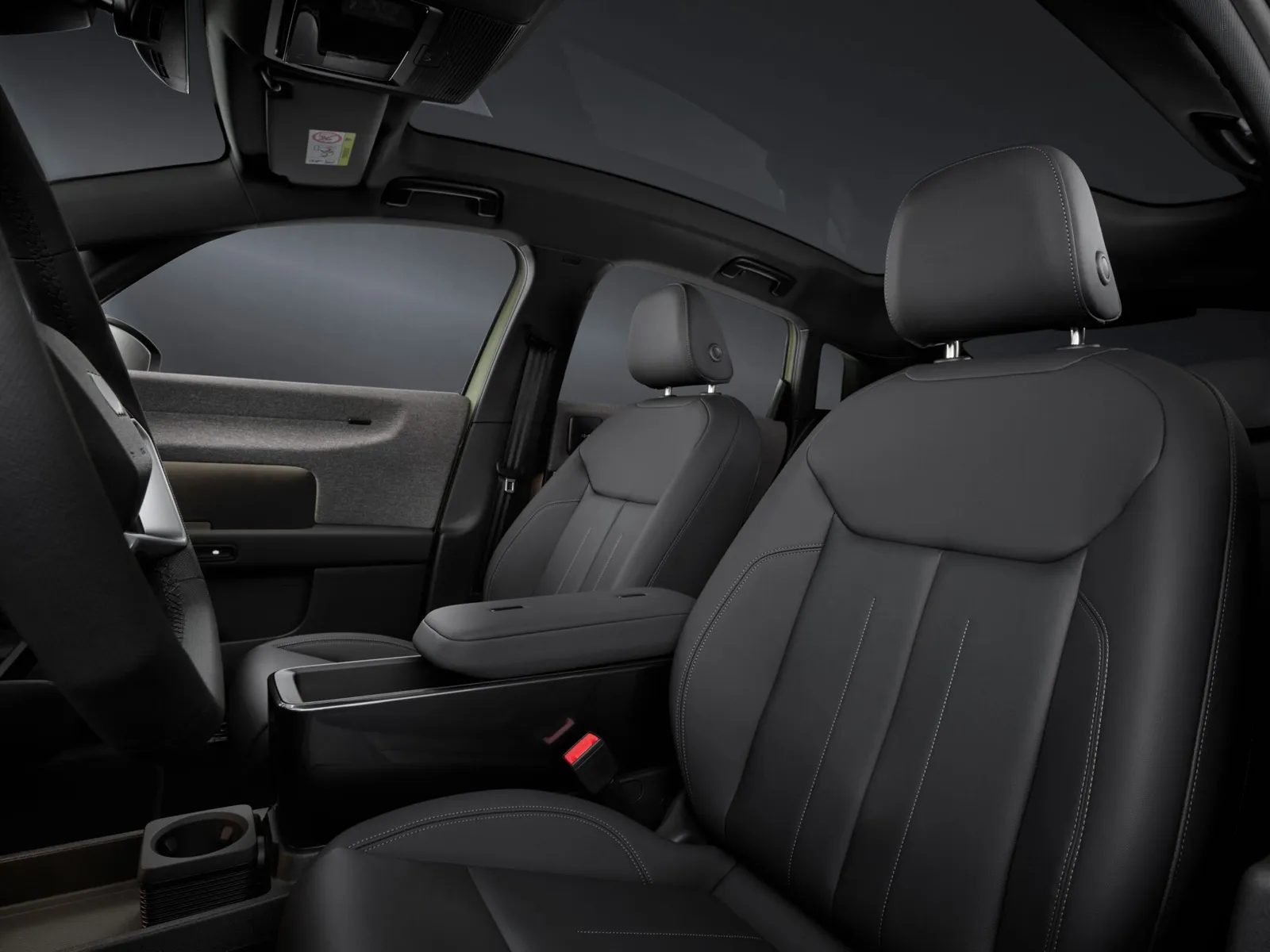
Boot capacity is 396 litres with the rear seats in place and 1,336 litres when they are folded. A 13-litre front luggage compartment is standard on the two 84kWh variants. Wheels range from 18 to 20 inches, with Audi identifying an aerodynamically optimised 19-inch package as the most efficient setup.
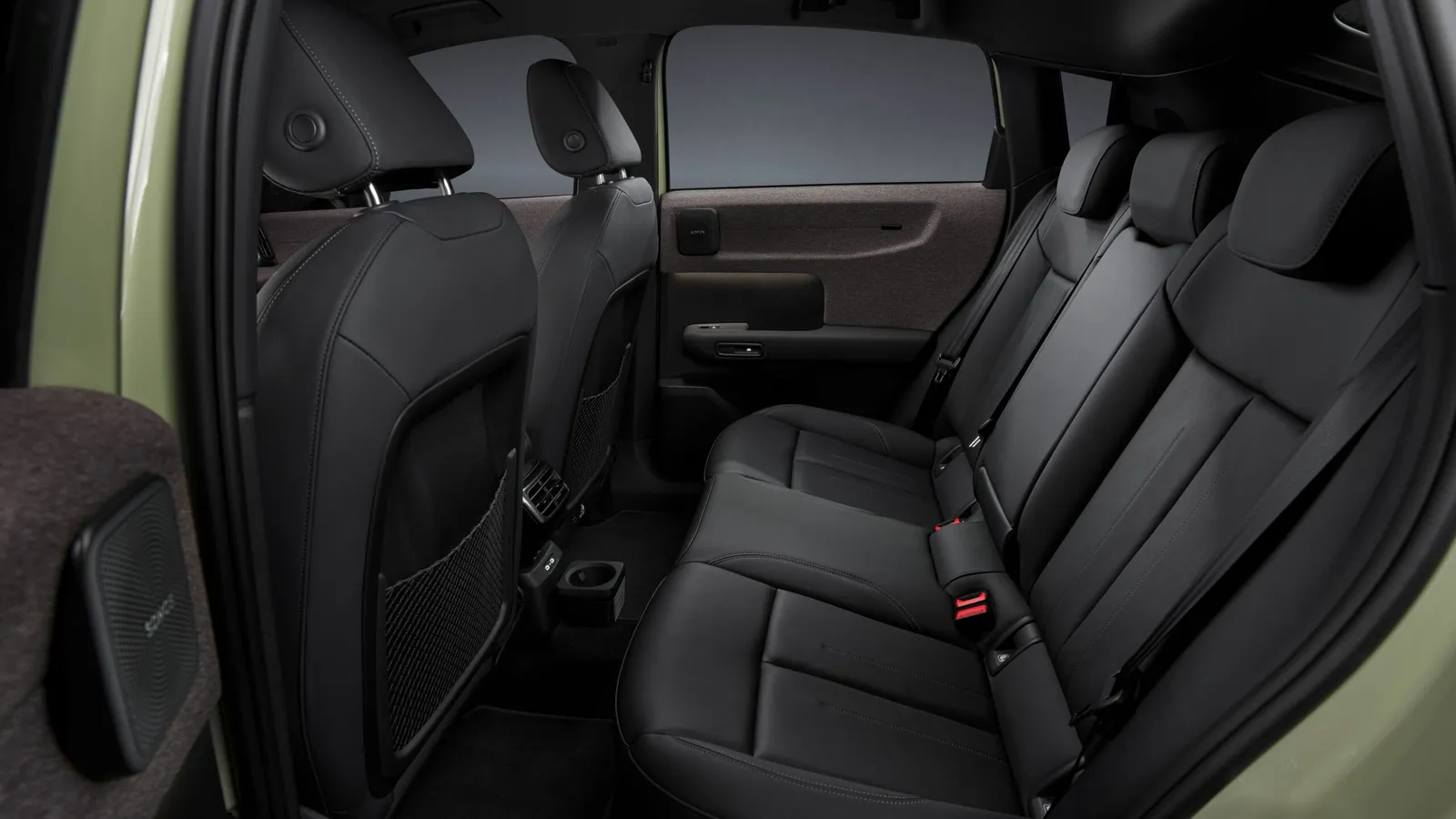
Inside, a fabric-covered “Softwrap” surface extends across the dashboard and doors, while the standard panoramic display combines an 11.9-inch Audi virtual cockpit with a curved 12.8-inch central touchscreen. An augmented-reality head-up display and a 1.6-square-metre panoramic glass roof will be optional.
The centre console includes a Qi 2.2 wireless charging area capable of powering two phones simultaneously at up to 25W. Audi is also introducing the Fidlock magnetic-mechanical fastening system as standard, allowing accessories such as cupholders and cable bags to click into modular mounting points.
High-End Assistance Comes As Standard
Standard driver assistance includes adaptive cruise control, a reversing camera, front emergency braking, swerve assistance, intersection assistance, rear cross-traffic assistance and an exit warning. Emergency assist can recognise an unresponsive driver, issue escalating warnings and, if necessary, stop the car and place an emergency call.
Optional systems add 3D surround-view cameras, automated parking and a trained-parking function able to memorise and repeat up to five manoeuvres. A higher-level adaptive cruise system will combine active lane guidance with speed and distance control, while Audi says a post-launch enhancement will enable assisted motorway lane changes when the indicator is activated.
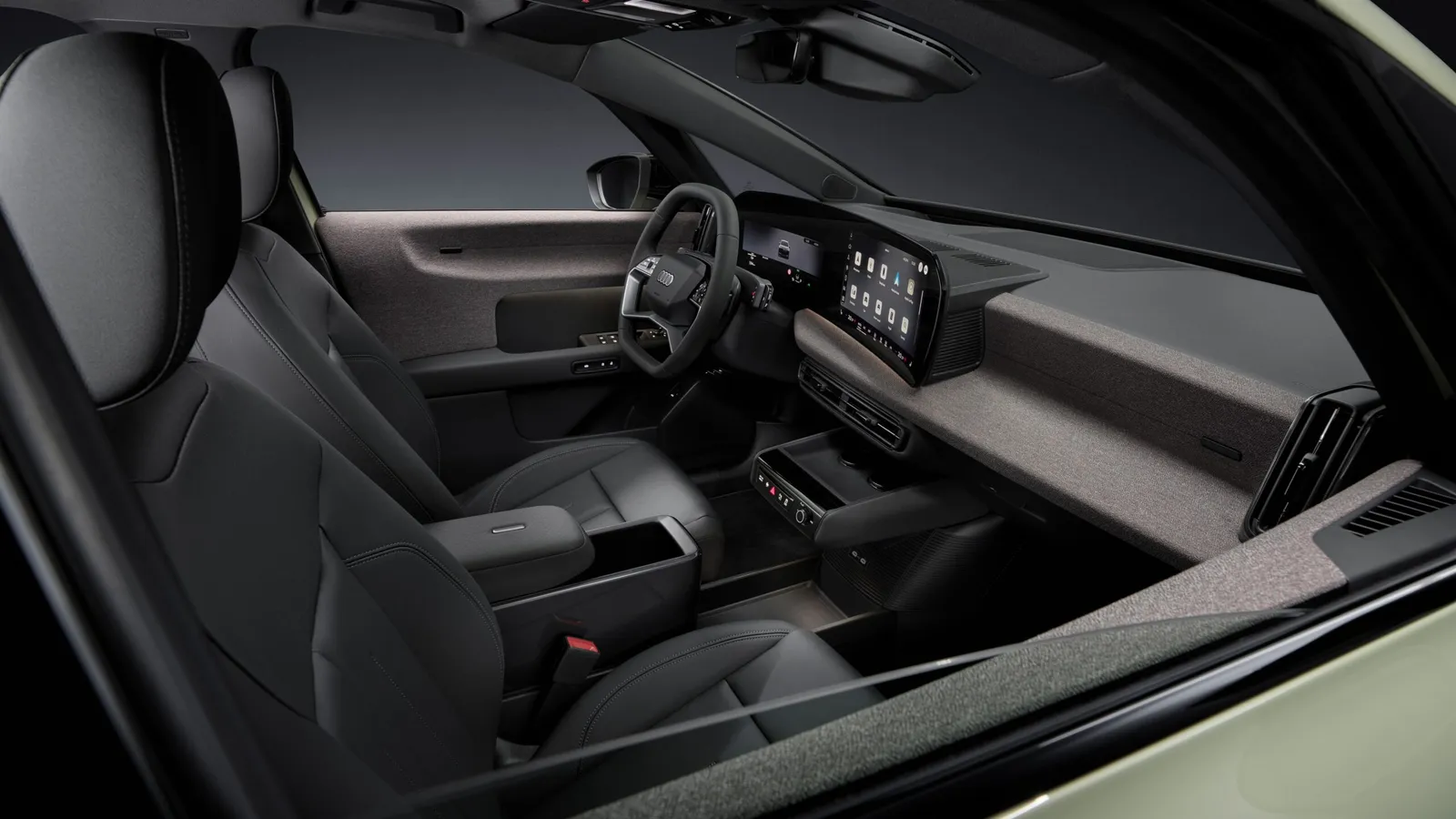
The infotainment system includes Audi’s e-tron route planner, which schedules charging stops, considers charger availability and preconditions the battery. Cloud-based AI supports natural-language requests, searches and questions about the vehicle, while an optional connected-work package integrates Microsoft Outlook and Teams.
The A2 e-tron also supports Vehicle-to-Load, allowing its battery to run external equipment through a socket in the boot or an adaptor at the charging port, provided at least 20% charge remains. Audi also plans Vehicle-to-Home capability using a compatible DC wallbox in selected markets, although UK availability and compatible hardware have yet to be confirmed.
Built At Audi’s Ingolstadt Plant
Audi will manufacture the A2 e-tron in Ingolstadt, Germany, in a 110,000-square-metre facility where its body will be built alongside the combustion-engined A3. Around 250 of the production robots have been redeployed from other Audi programmes, part of an effort to reduce investment and make the car more affordable.
More than 300 components contain some recycled steel, aluminium or plastic, according to Audi, with more than 100 using post-consumer material. Optional Softwrap fabrics and sports-seat upholstery are made from 100% recycled polyester, while components have been simplified to make future recycling easier.
By combining a mainstream starting price with premium cabin technology, strong efficiency and a possible 400-mile-plus range, the A2 e-tron could become one of Audi’s most consequential electric cars. Its real impact will depend on how much of that specification is included at £32,200, but the headline figures suggest Audi is preparing to compete for far more than the traditional premium-EV audience.
Performance data for the A2 e-tron
Technical data
A2 e-tron
170 PS
A2 e-tron
190 PS
A2 e-tron
231 PS
A2 e-tron
326 PS
Maximum electric power
in kW / PS
125 / 170
140 / 190
170 / 231
240 /326
Maximum electric torque
in Nm
350
350
350
545
Combined consumption
in kWh/100 km
From 13.7
From 12.8
From 13.9
From 14.2
CO2 emissions
in g/100 km
0
0
0
0
Energy efficiency class
A
A
A
A
Top speed
99
99
99
124
Acceleration
0-62 mph in s
8.8
7.9
7.0
5.7
Maximum range
miles
Up to 262
Up to 320
Up to 401
Up to 391
Battery capacity
in kWh
52
61
84
84
Maximum DC charging capacity
in kW
100
105
183
183
DC charging time 10–80%
in minutes
24
26
29
29