
CATL unveils 9-MWh Tener+ storage system, deepens Australian presence
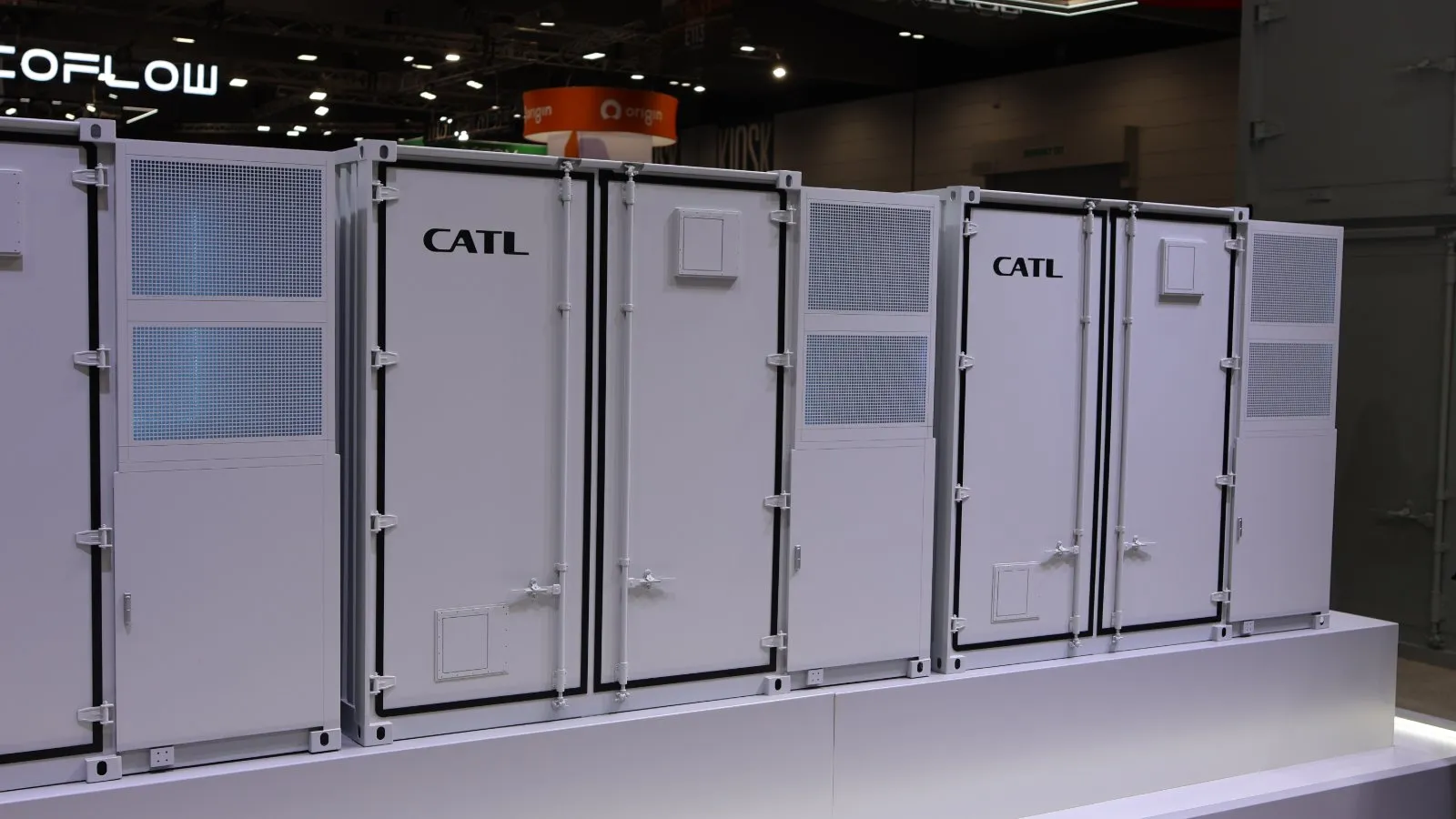
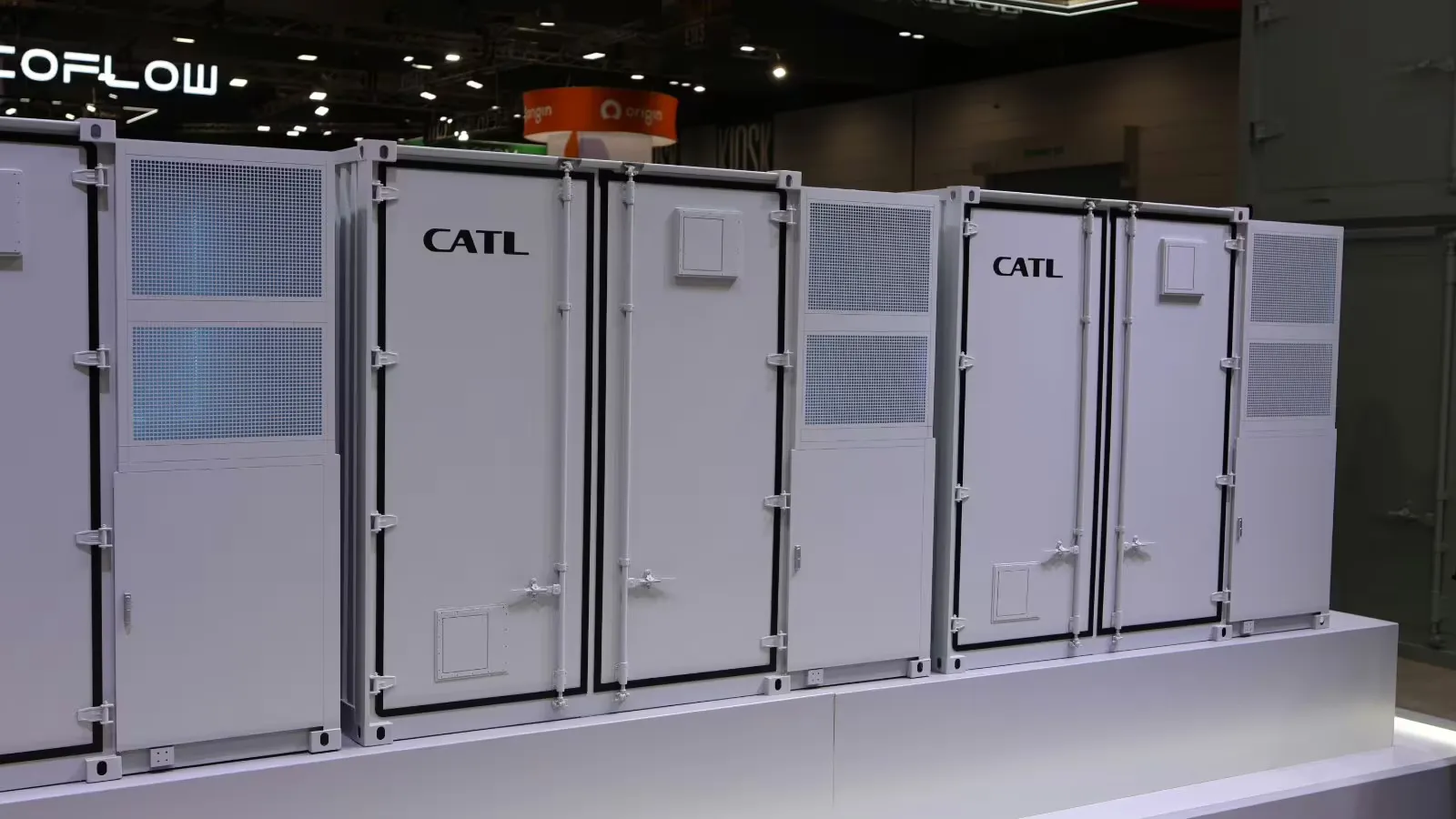
Compared with conventional solutions, Tener+ can reduce container requirements by up to 40% and cut project footprints by 12%.
CATL signed cooperation memorandums with 3 partners and showcased its sodium-ion energy storage system in Australia for the first time.
CATL (HKEX: 3750) unveiled its next-generation Tener+ energy storage system with a capacity of 9 MWh, while expanding its presence in Australia's energy storage market through local partnerships.
The company launched the product at All Energy Australia 2026 in Melbourne on Wednesday, alongside the Australian debut of its Tener Sodium sodium-ion battery energy storage system.
Tener+ targets grid-scale long-duration energy storage projects, aiming to reduce equipment requirements, land use and deployment complexity by increasing storage capacity per container.
Compared with conventional solutions, Tener+ can reduce the number of containers needed by up to 40% and shrink project footprints by 12%, according to the battery giant.
CATL said the system has a design life of 25 years and uses its proprietary cell technology designed to slow degradation. Customers can choose different configurations based on local climate conditions and project revenue models.
Options include cell configurations optimized for high temperatures or offering 3 years of zero degradation. The 2 options address different operating needs, and the zero-degradation feature is not available across all configurations.
The system uses a top-exhaust design that directs hot air upward, reducing its impact on neighboring equipment. The company said this helps power conversion systems (PCS) maintain full rated output even in harsh summer conditions.
Its intelligent thermal management system can improve round-trip efficiency and reduce auxiliary power consumption. Multiple Tener+ systems can also be commissioned simultaneously with a single click to simplify deployment, CATL said.
The launch further expands CATL's Tener product lineup. The company introduced the 6.25-MWh Tener in April 2024, followed by the 9-MWh Tener Stack in May 2025.
Tener Sodium, displayed alongside Tener+ in Melbourne, uses a modular cabinet architecture and can deliver more than 30 MWh of system-level storage capacity, giving developers an alternative to lithium-ion technology.
CATL said the sodium-ion system can operate at ambient temperatures of up to 55°C (131°F) and achieve a cycle life of more than 10,000 cycles at 45°C.
Tener Sodium was launched in June this year. CATL is bringing it to overseas markets and separately announced a partnership with Germany's Intilion earlier on Wednesday, with plans to deploy 3 GWh of sodium-ion energy storage systems in Europe over the next 5 years.
Boosting bets on Australia
In Australia, CATL signed memorandums of understanding with Hitachi Energy, EPEC Group and UNSW Sydney.
The Hitachi Energy partnership will combine CATL's DC-side battery products with Hitachi Energy's power conversion systems, laying the groundwork for future integrated solutions in Australia and the Asia-Pacific region.
The EPEC Group partnership will focus on grid connection, engineering delivery and system validation, drawing on the testing capabilities of CATL's Xiamen Energy Storage Validation Research Institute (ESVL) to support project deployment.
CATL also plans to establish an integrated renewable energy training and innovation center in Western Sydney with UNSW Sydney to develop the skilled workforce needed for the local energy transition.
The partnerships reflect CATL's expansion in Australia beyond equipment supply into grid connection, project delivery and long-term services to meet the operating needs of large-scale storage projects.
Zane Zhou, CATL's head for Australia, New Zealand and Oceania, said battery value should be assessed over a project's entire lifecycle and the key is whether batteries can meet expected charging and discharging requirements and support customers' participation in Australia's National Electricity Market (NEM).
The company said it has deployed more than 3,000 energy storage projects globally, with cumulative installed capacity across its Australian projects exceeding 17 GWh.
CATL's global lithium-ion energy storage battery shipments reached 125.0 GWh in the first half of 2026, up 81% year-on-year, giving it the leading market share of 27.1%, according to South Korean market researcher SNE Research.
Market share of world's top ESS battery makers (Jan-Jun 2026)
0%
10%
20%
30%
CATL
Eve Energy
Hithium
BYD
CALB
Rept Battero
Cornex
AESC
Gotion High-tech
Great Power
LG Energy Solution
Samsung SDI
Others
Market Share of World's Top ESS Battery Makers (Jan-Jun 2026)
Company
Market share (%)
CATL
27.1%
Eve Energy
10.4%
Hithium
10.0%
BYD
7.7%
CALB
6.8%
Rept Battero
6.8%
Cornex
6.5%
AESC
4.6%
Gotion High-tech
4.5%
Great Power
4.4%
LG Energy Solution
2.6%
Samsung SDI
1.4%
Others
7.0%
The 7 Chinese companies in the top 10 held a combined 73.3% share of the global EV battery market.