
Volkswagen’s most modern factory now not only produces new electric cars but also disassembles old ones.
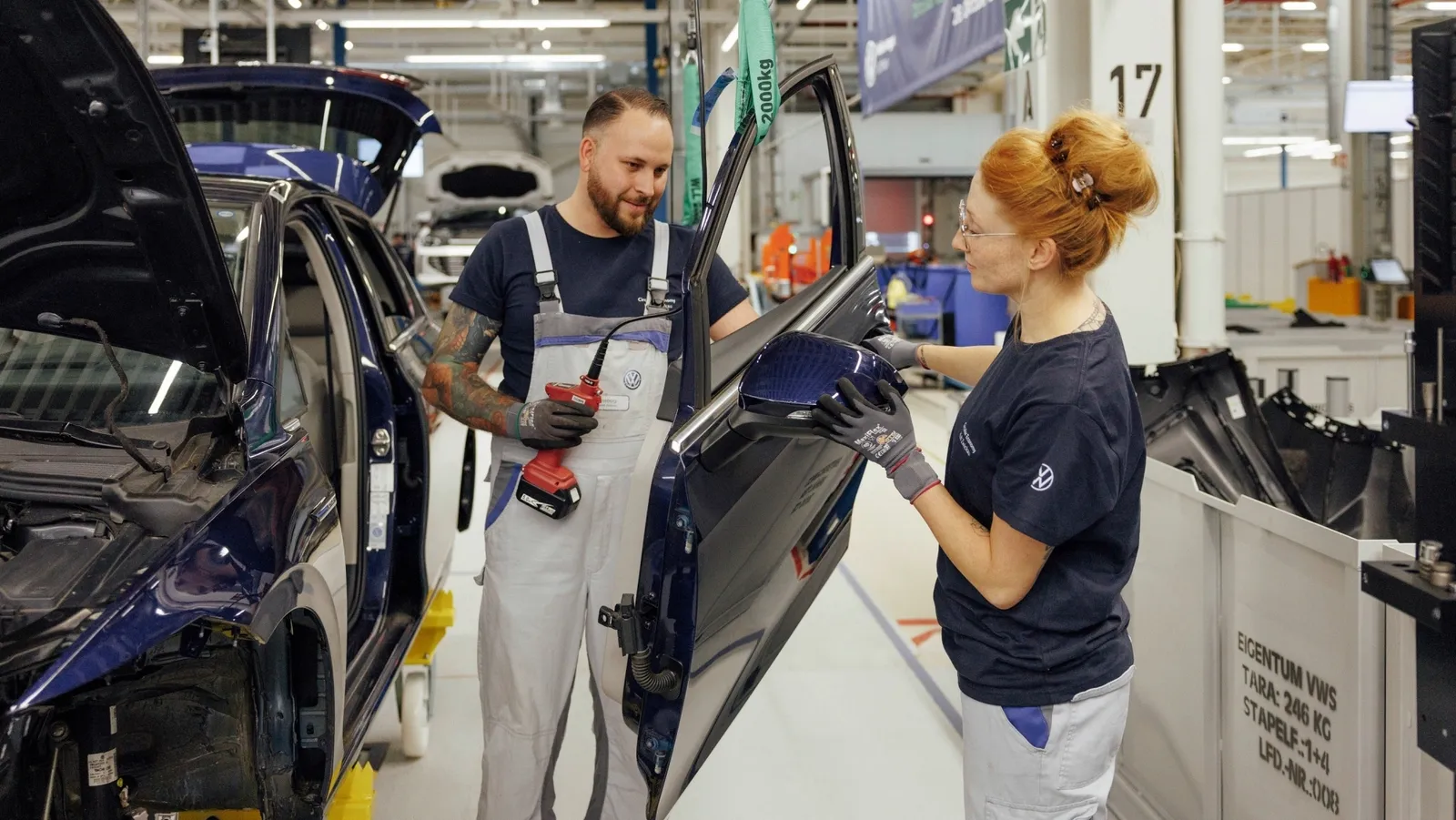
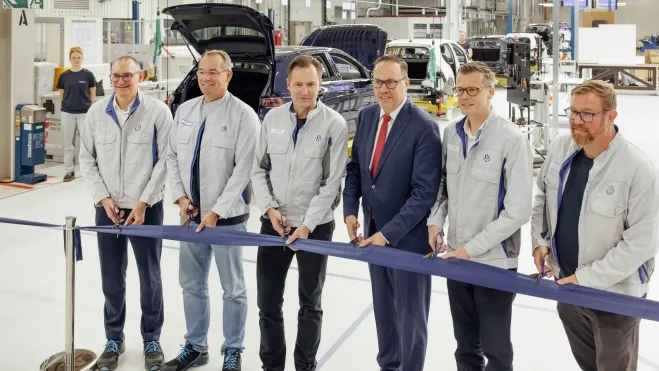
A Volkswagen door, bumper, or transmission no longer has to end up in a scrapyard. The factory in Zwickau, in eastern Germany, which has produced over a million electric vehicles for the group, has launched its first industrial disassembly line. It has eight stations and operates like an assembly line, but in reverse.
There is more to this than just a parts recycling business. Starting in 2032, Europe will require that new cars contain a certain amount of recycled plastic, which necessitates large-scale, factory-based disassembly of old vehicles rather than in garages. Thomas Schäfer, CEO of Volkswagen, summarized it as follows: “From now on in Zwickau, we not only assemble cars but also disassemble them, with the same industrial precision.”
Eight stations and 4,100 cars per year
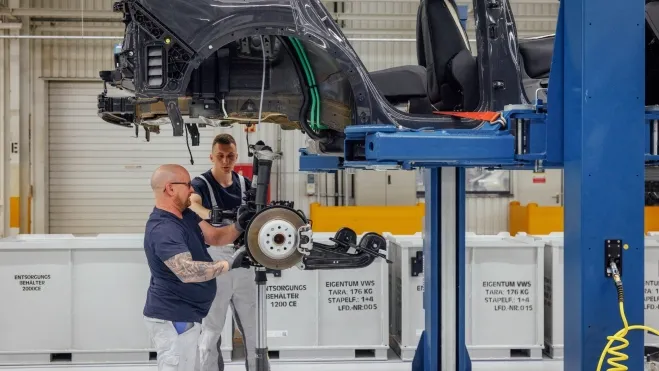
For now, the production line is handling pre-series cars, which are manufactured before full-scale production begins, with end-of-life vehicles following later. Starting in 2027, the plant will disassemble 4,100 cars per year in two shifts, employing 100 workers who have already been trained for this new task.
This figure is just the first step. When presenting the project in January, Volkswagen aimed to reach 15,000 cars per year by 2030 and invested up to 90 million euros in the facility, with around 10.7 million euros in support from the state of Saxony. In the future, other factories within the group might convert some of their production lines to perform similar tasks.
Nine months of work and reused machinery
The construction progressed faster than expected. From the start in January to the installation of the machinery with all permits approved, it took nine months—three less than planned. During that time, 1,200 square meters of ground was covered, 94 tons of steel were installed, and 100 meters of high-voltage electrical lines were laid for internal logistics. A significant portion of the funds was spent preparing areas to store raw materials and waste without damaging the environment, and to save costs, machinery from the car manufacturing plant itself was reused.
Original parts tailored for a car with years of use
The first commercial product is spare parts. Volkswagen adds used original parts to its after-sales service, at prices appropriate for cars that are already a few years old. The most sought-after parts are those for the body, such as doors and bumpers, as well as engines and transmission components.
The parts from Zwickau have been available since July through dealerships and official services, as well as independent repair shops and spare parts distributors. According to the group’s subsidiary that distributes original parts (OTLG), this offering reduces total accident costs due to economic reasons, meaning cases where repairing a car costs more than it is worth.
Plastic from old cars for three new ones
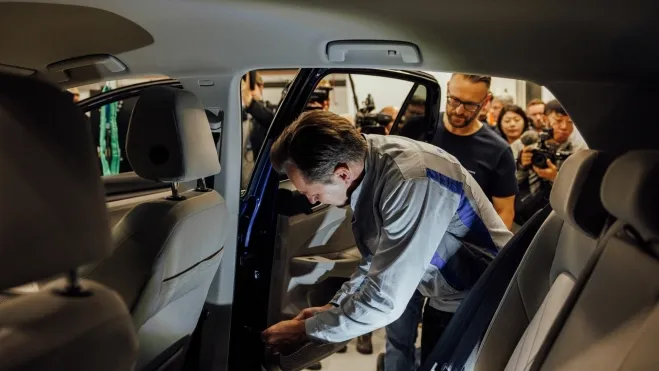
The long-term goal is raw materials. Volkswagen estimates that in the future, the plastic recovered from a single car at the end of its useful life will be sufficient to manufacture three new cars. By doing this, the company aims to reduce material costs, rely less on virgin raw materials, and secure its supply chain. Employment is also at stake in Zwickau. The entry into this business was agreed upon with the unions in December 2024, as part of the same deal that reduced Volkswagen’s production in Germany and will reduce car manufacturing at the plant to a single line starting in 2027; the new operation is expected to employ up to 1,000 people.
The plan is to expand the system across Europe through a network of partners, and there’s a reason for the urgency. The new European regulation on end-of-life vehicles requires that new cars approved in the European Union contain at least 15% recycled plastic starting in September 2032, and 25% by 2036. Additionally, one-fifth of that plastic must come from scrapped cars or their components.