
Polestar ends production of the Polestar 2 in China
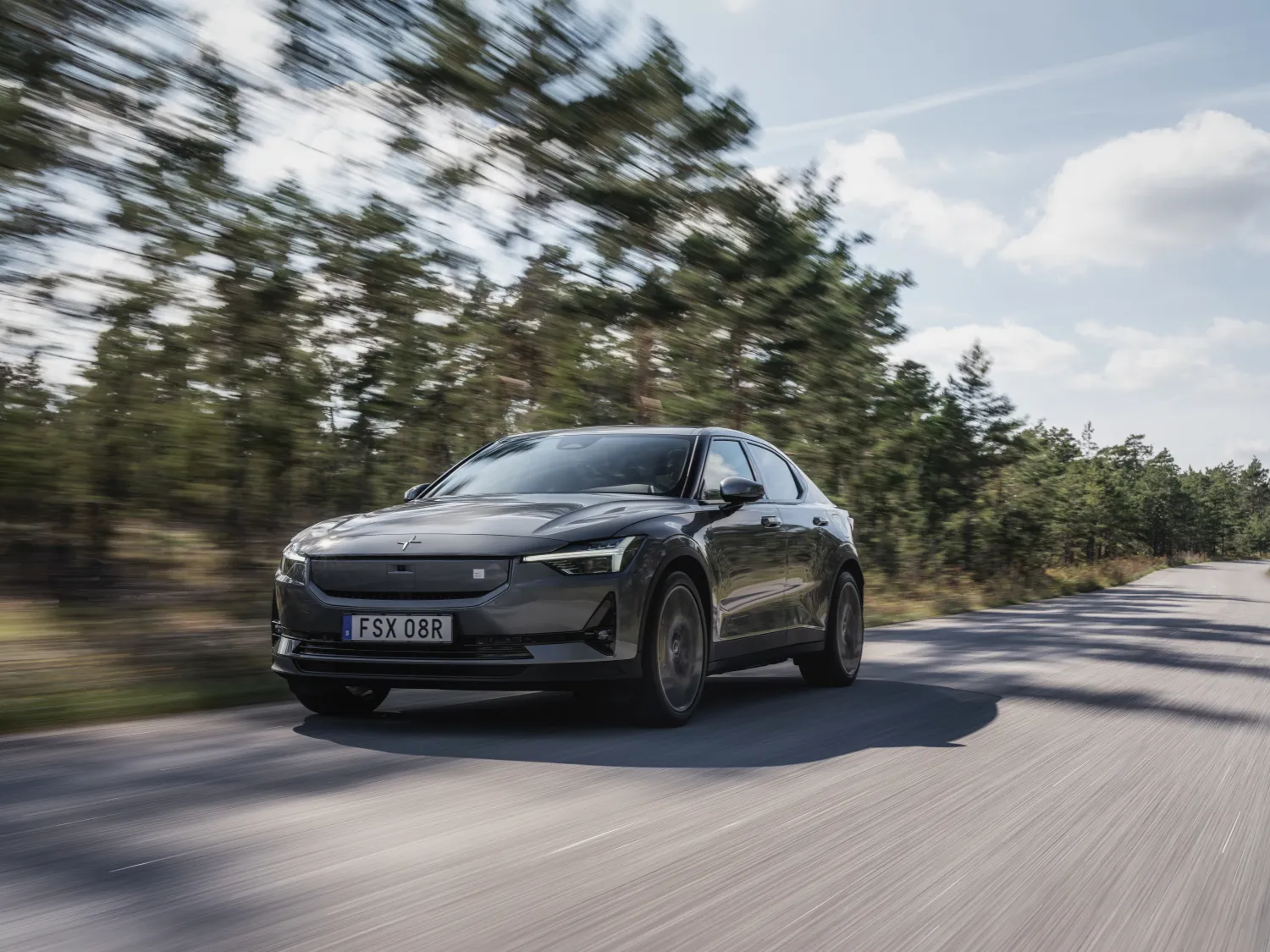
Production of the Polestar 2 in China is coming to an end after more than six years, where over 200,000 units of the electric fastback were built in in Luqiao. A completely new successor is set to launch in early 2027. For Polestar, the model changeover coincides with an already challenging transitional phase.
The Polestar 2 was the brand's first all-electric production model.
Image: Polestar
The last units of the Polestar 2 have reportedly already rolled off the production line in Luqiao, China. While the company has yet to officially announce the end of production, it is already directing customers in several European markets towards available stock vehicles rather than accepting new configurable orders.
The Polestar 2 has been manufactured in Luqiao since March 2020. According to media reports, just over 200,000 vehicles were produced there. Polestar last reported more than 190,000 units sold.
The model was particularly important for Norway, where more than 16,000 Polestar 2 cars were sold. Polestar Norge recently described the model as decisive for the brand’s strong market entry. This is because the roots of the Polestar 2 trace back to the Volvo era. In 2016, Volvo unveiled the 40.1 and 40.2 concept studies. While the 40.1 later evolved into the XC40, the 40.2 eventually became the Polestar 2.
The model received its most significant technical update in 2024. At that time, Polestar switched key variants from front- to rear-wheel drive and comprehensively revised the powertrain.
From Volvo concept to Polestar success model
A completely new successor is expected to arrive in early 2027. Polestar has already announced that the next generation will not be a mere facelift but a fundamentally new vehicle. Norwegian broadcaster _TV 2 Broom_ reports it will be a new crossover. However, Polestar has not yet officially confirmed the body style, platform, or production location. In markets such as Norway and Sweden, new configurations are no longer being accepted, and buyers are being directed to stock vehicles. This means one of the brand’s most important models is being phased out before its successor is available.
The model change also coincides with a phase in which Polestar is reorganising its model range and regional focus. In the first half of 2026, global sales rose only slightly by 0.4 per cent to 30,423 vehicles, while revenue fell by around four per cent to 1.36 billion US dollars. At the same time, Polestar significantly reduced its operating loss.
For the full year, the company lowered its growth forecast from a low double-digit to a low to mid-single-digit percentage range. Among the reasons cited by Polestar were the phasing out of the Polestar 2’s lifecycle and changes in its US business.
From model year 2027, Polestar will no longer be allowed to sell new vehicles in the US due to the Connected Vehicle Rule. Around 80 per cent of sales now come from Europe, making the continent even more critical for the next model generation. Despite these challenges, Polestar started 2026 strongly with 13,126 vehicles sold in the first quarter, when the brand achieved its best Q1 to date. However, as the year progressed, it became clear that the Polestar 2 model change and the restructuring in the US were slowing growth.
The Polestar 4 SUV launched in September 2026 is already being produced in Busan, South Korea, with manufacturing having commenced in the second quarter. Even though the model can already be ordered, it will take some time before the first units reach customers in Europe. While the first deliveries are scheduled to begin in the fourth quarter of 2026, the configurator indicates a delivery window of January to February 2027 for the German market.
For Polestar, the end of production in China is more than just a regular model change. The Polestar 2 was the foundation of the brand and, for years, its most important volume model. The successor must now not only impress technically but also fill a gap while Polestar expands its portfolio and shifts its focus more strongly towards Europe.